Service 02
Data collection and analysis that drive the business.
We collect your data from every source (Shopify, marketplaces, ads, APIs, even documents read by an LLM) into one BigQuery warehouse, then turn it into the Looker Studio dashboards, stock projections, and landed costs your decisions run on.
The problem
KPIs compiled by hand.
Your sales live in Shopify, your ad spend in each ad platform, your marketplace and wholesale numbers in their own portals, and some of what matters only exists in PDFs. Getting one answer means exporting, pasting, and reconciling, every week.
Bravo Sierra compiled its KPIs that way, from disparate vendor dashboards. Bonjout Beauty ran on gigantic Excel files. Bulq.ai had thousands of differently formatted supplier quotes to turn into prices.
What we build
From every source to a decision.
Collection from every source
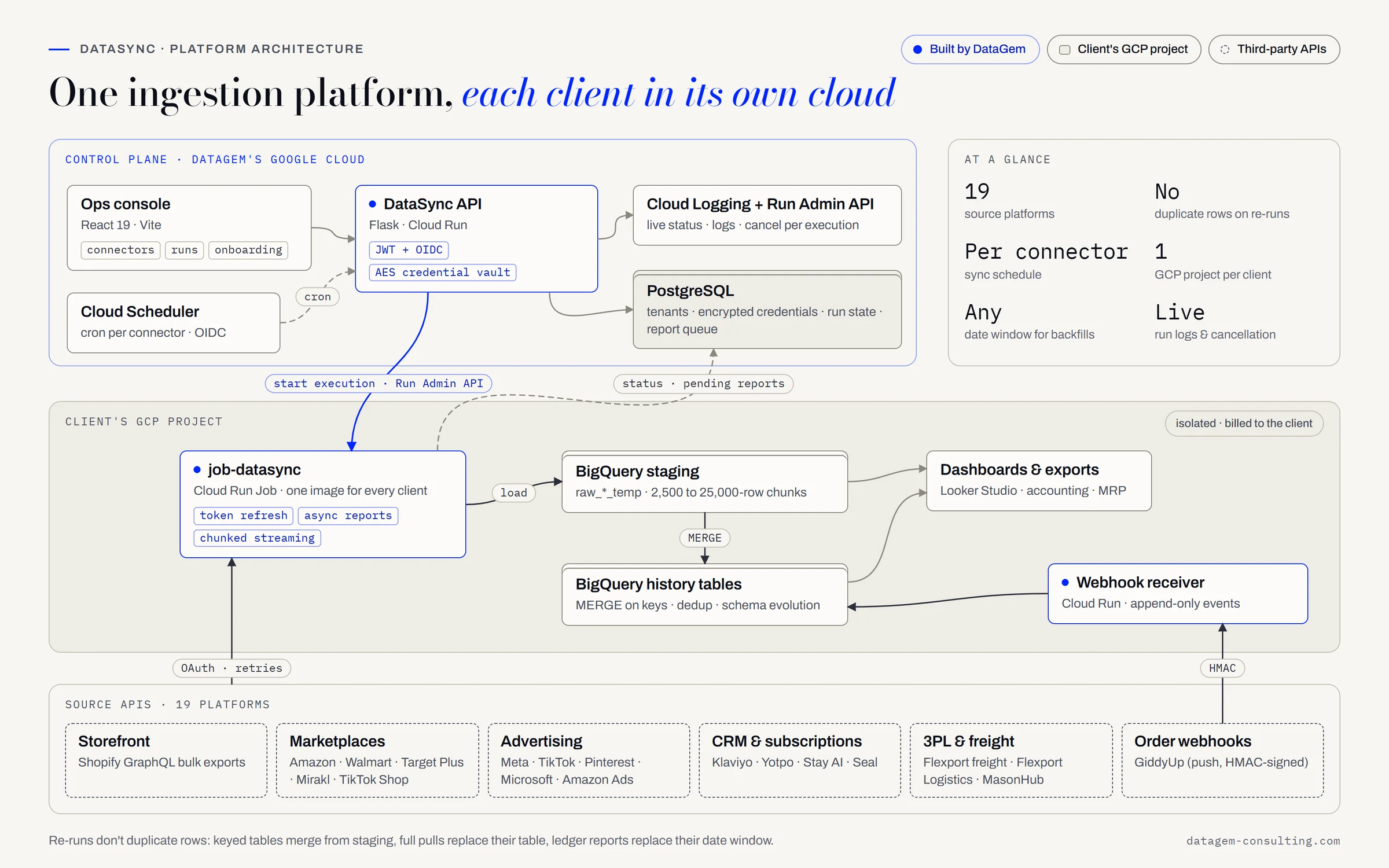
Shopify, marketplaces, ad platforms, and other APIs through DataSync, DataGem's ingestion platform: 19 source platforms, from Shopify, Amazon, Walmart, Target Plus, Mirakl, and TikTok Shop to Meta, Klaviyo, and Flexport.
AI document extraction
When the data lives in files: supplier quotes turned into validated prices for Bulq.ai, with human review where judgement is needed, in a pipeline re-architected to cap LLM spend, and retailers' purchase orders parsed into Bonjout Beauty's MRP.
Pipelines you can trust
Staging tables merged into history by key, so a re-run never duplicates rows; backfills over any date window; and one canonical record when several sources describe the same thing, as for FundReachr's investors.
An e-commerce data warehouse
Shopify to BigQuery every day, next to your wholesale, advertising, and marketplace data, in your own Google Cloud project: the data stays in your account, and the compute is billed to you.
Analysis that drives decisions
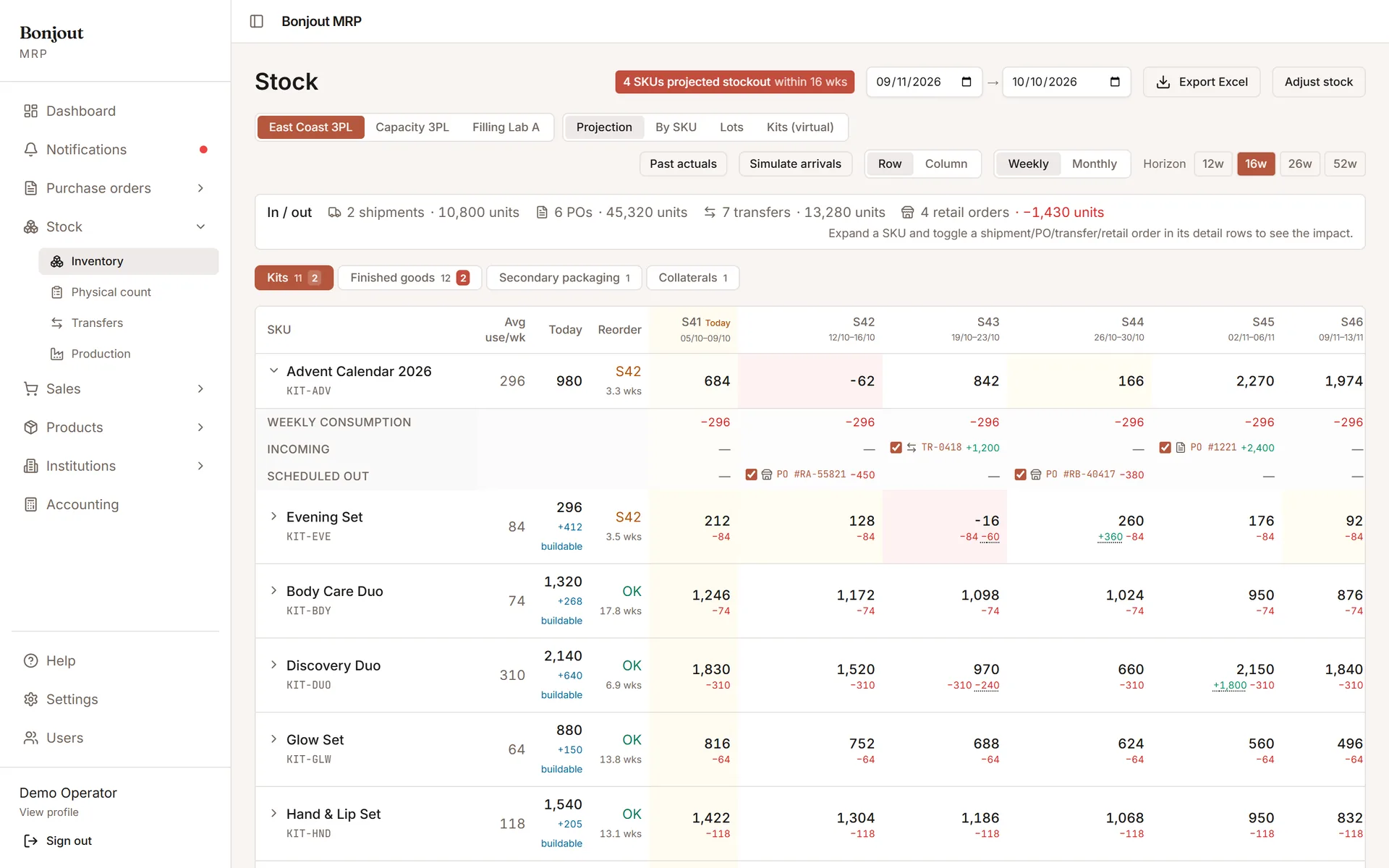
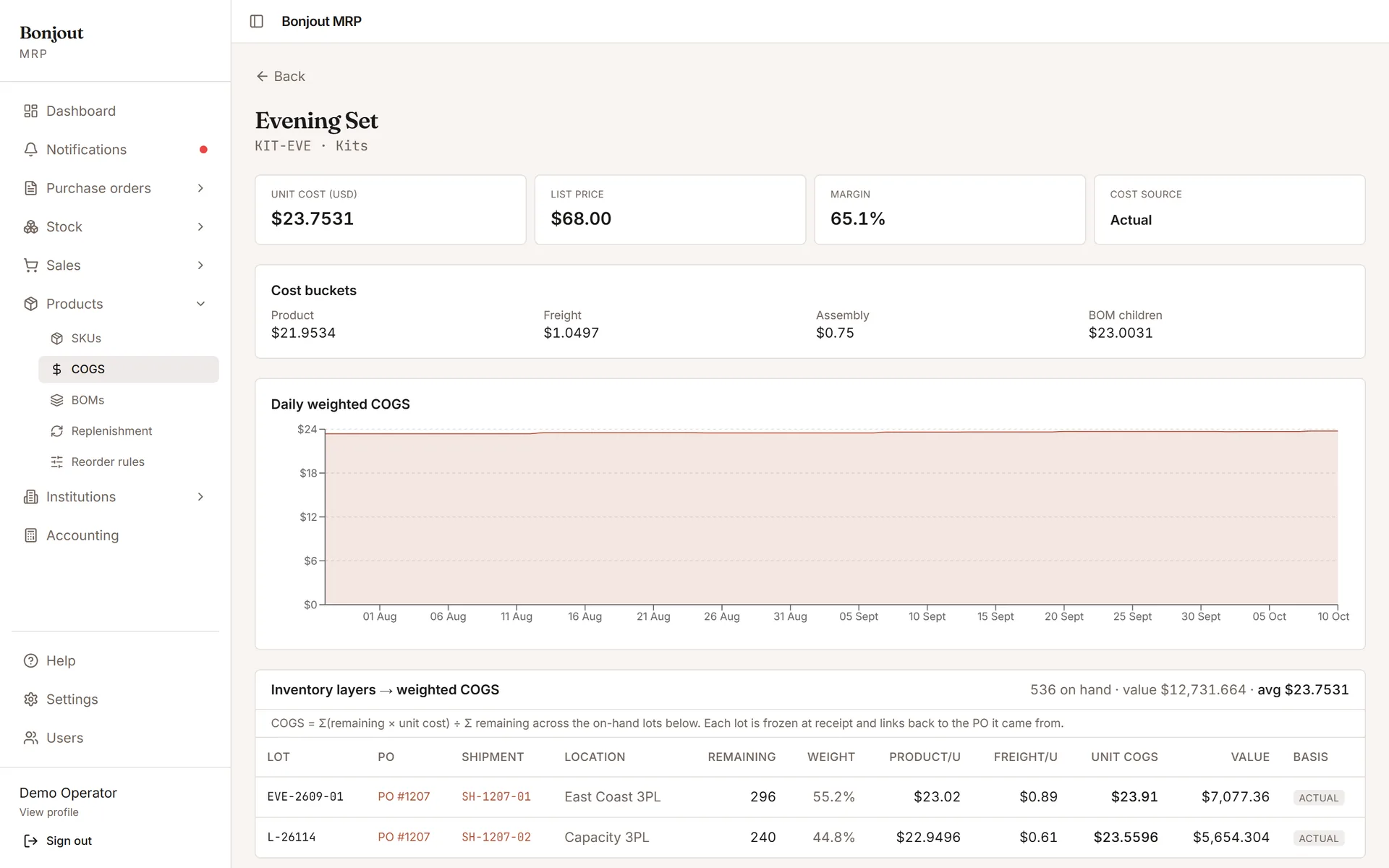
Looker Studio dashboards shaped around how your business runs, weekly stock projections with a reorder-by week, and landed-cost COGS, as in Bonjout Beauty's custom MRP.
How we work
From your questions to your screen.
01
Start from your KPIs
We start from the numbers you compile today and the decisions they drive, then list the sources behind them. Business goals first, architecture second.
02
Collect and backfill
We connect each source in your Google Cloud project, backfill the history you need, and schedule the syncs.
03
Build the dashboards with you
Tight iterations: you see working dashboards every week, not status reports.
04
Keep it running
We monitor the syncs and add the analysis you ask for as your questions change. You work directly with the people writing the code.
Stack
BigQuery at the core.
Python connectors run as Cloud Run jobs in your Google Cloud project, scheduled by Cloud Scheduler, and land in BigQuery; Looker Studio sits on top, or SQL, Google Sheets, and the BI tool you already use; LLMs read the documents.
- BigQuery
- Looker Studio
- Python
- SQL
- Cloud Run Jobs
- Cloud Scheduler
- Shopify GraphQL
- LLMs
- DataSync
Proof
Data that runs the business.
CPG · Personal care
Bravo Sierra
Every data source, one dashboard
DTC, wholesale, and advertising data brought into one BigQuery warehouse behind Looker Studio dashboards, in place of KPIs compiled by hand from vendor dashboards.
Key figures
- Warehouse for DTC, wholesale and ad data
- 1
- Source platforms DataSync connects
- 19
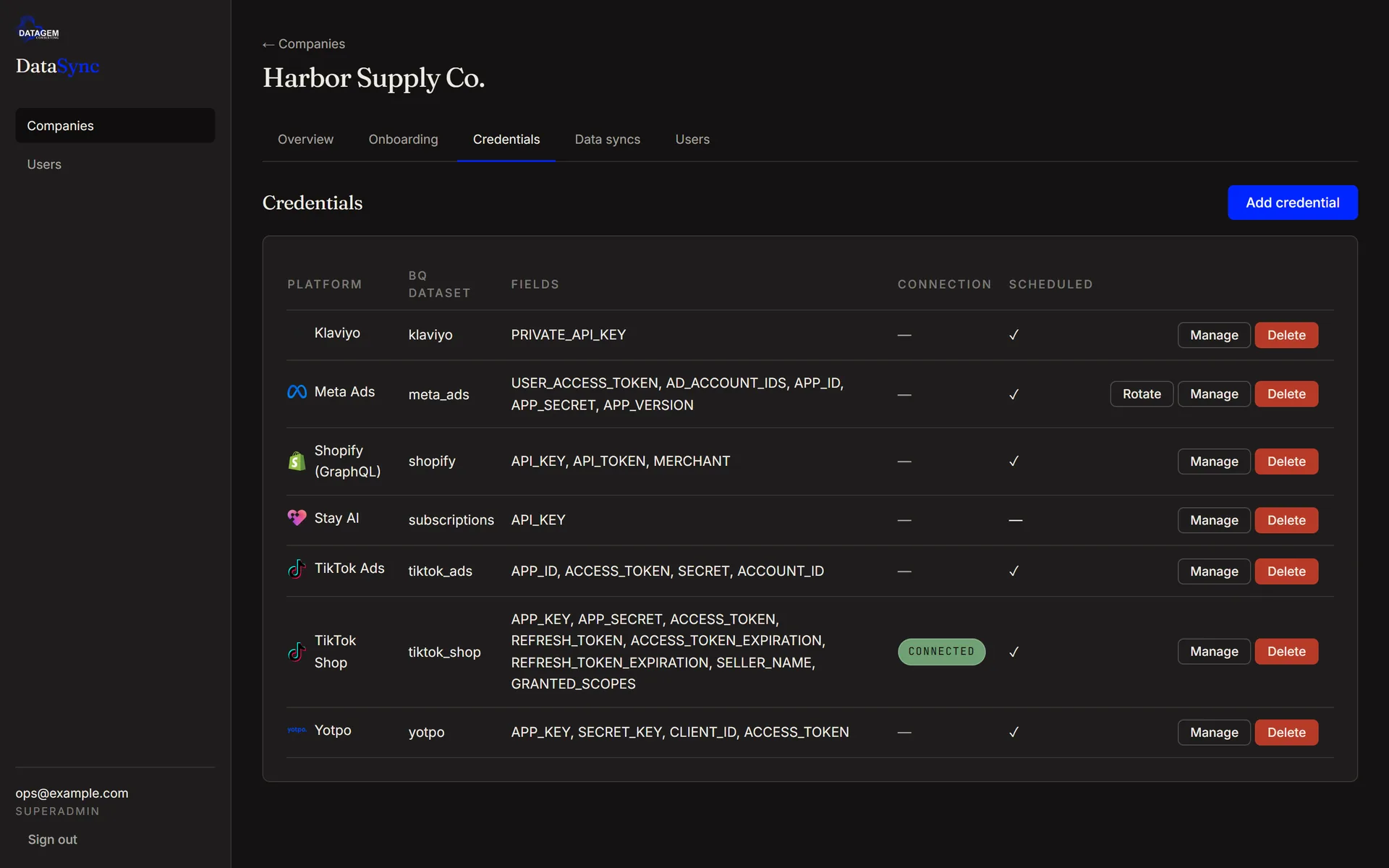
DataSync (demo tenant): storefront, ads, email, reviews and subscription connectors in one place. Demo data Fundraising · SaaS
FundReachr
An AI investor-outreach SaaS, built and shipped end to end
An investor-data engine that collects investors, classifies them with an LLM, enriches and de-duplicates them into BigQuery, and syncs the result into the app every day.
Key figures
- Investor data synced into the app
- Daily
- Canonical record per investor
- 1
- Sectors in the investor taxonomy
- 43
- Languages for AI-written messages
- 11
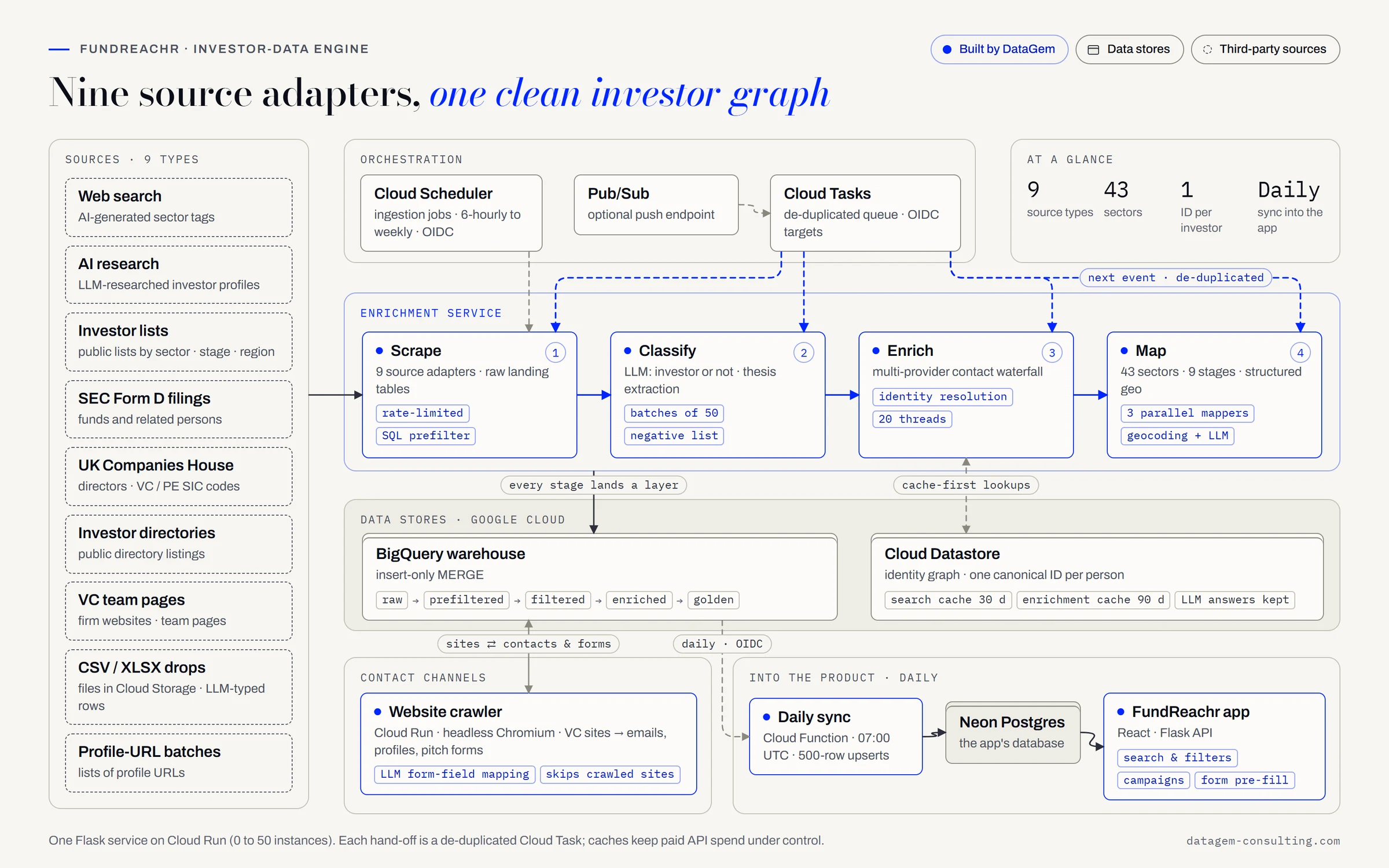
The investor-data engine: scheduled collection, LLM classification, enrichment and identity resolution into BigQuery, synced daily into the app. Construction · AI
Bulq.ai
From no-code to a real engineering platform
The extraction platform that turns thousands of differently formatted supplier quotes into validated, structured prices, re-architected around LLM cost ceilings per document and per day.
Key figures
- Differently formatted supplier quotes
- Thousands
- LLM spend in the re‑architected pipeline
- Capped
- Recovery sweep in the re‑architected pipeline
- 5 min
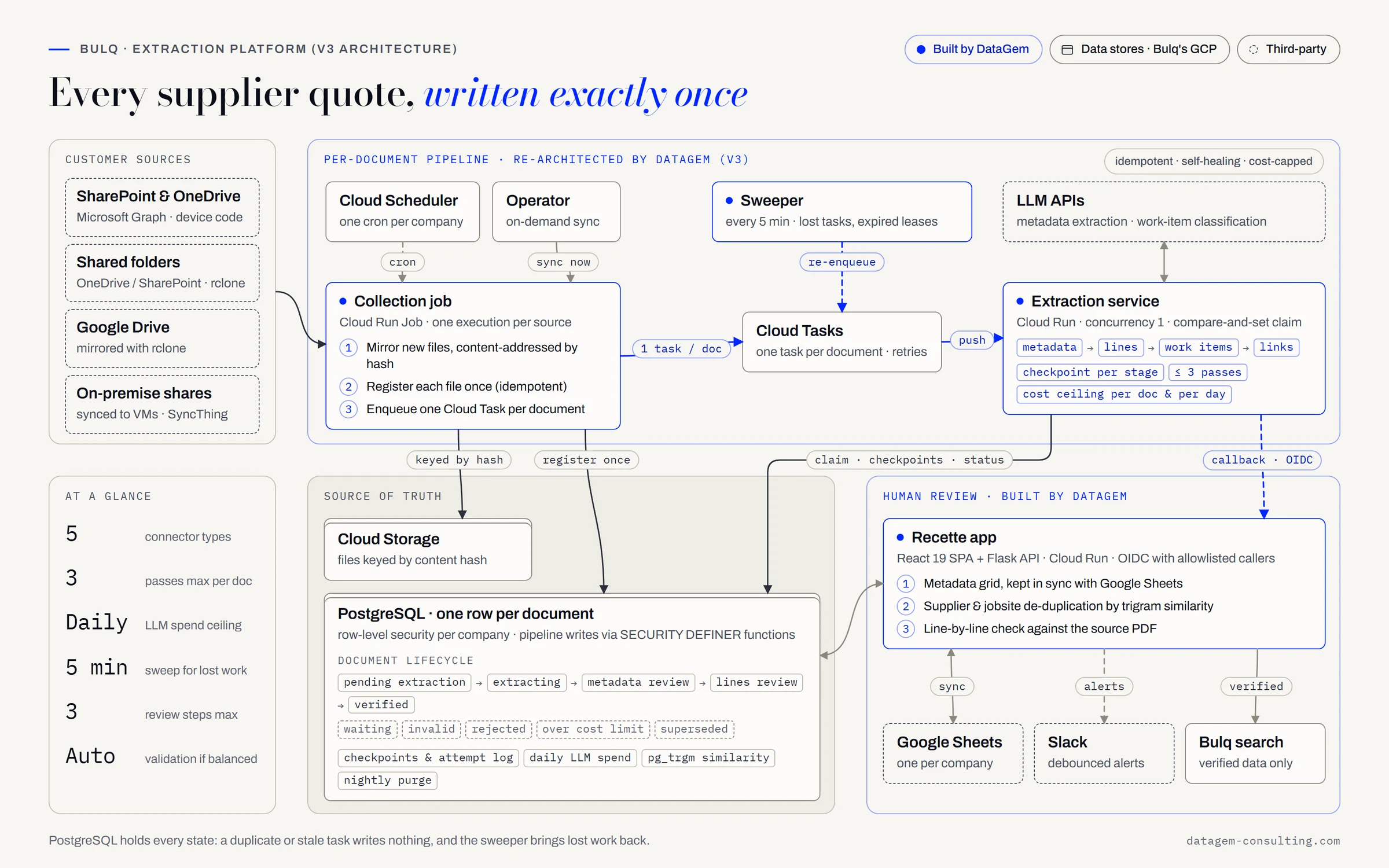
The V3 pipeline: one queued task per document, PostgreSQL as the single source of truth. Beauty · E-commerce
Bonjout Beauty
From spreadsheets to an MRP platform
Sales data landed in BigQuery every day for the dashboards that replaced the spreadsheets, then weekly stock projections and landed-cost COGS in the brand's MRP.
Key figures
- From Shopify order to the MRP
- Minutes
- Weeks of stock projection
- 12 to 52
- Backdated COGS restatement
- 2 years
- Sales data landed in BigQuery
- Daily
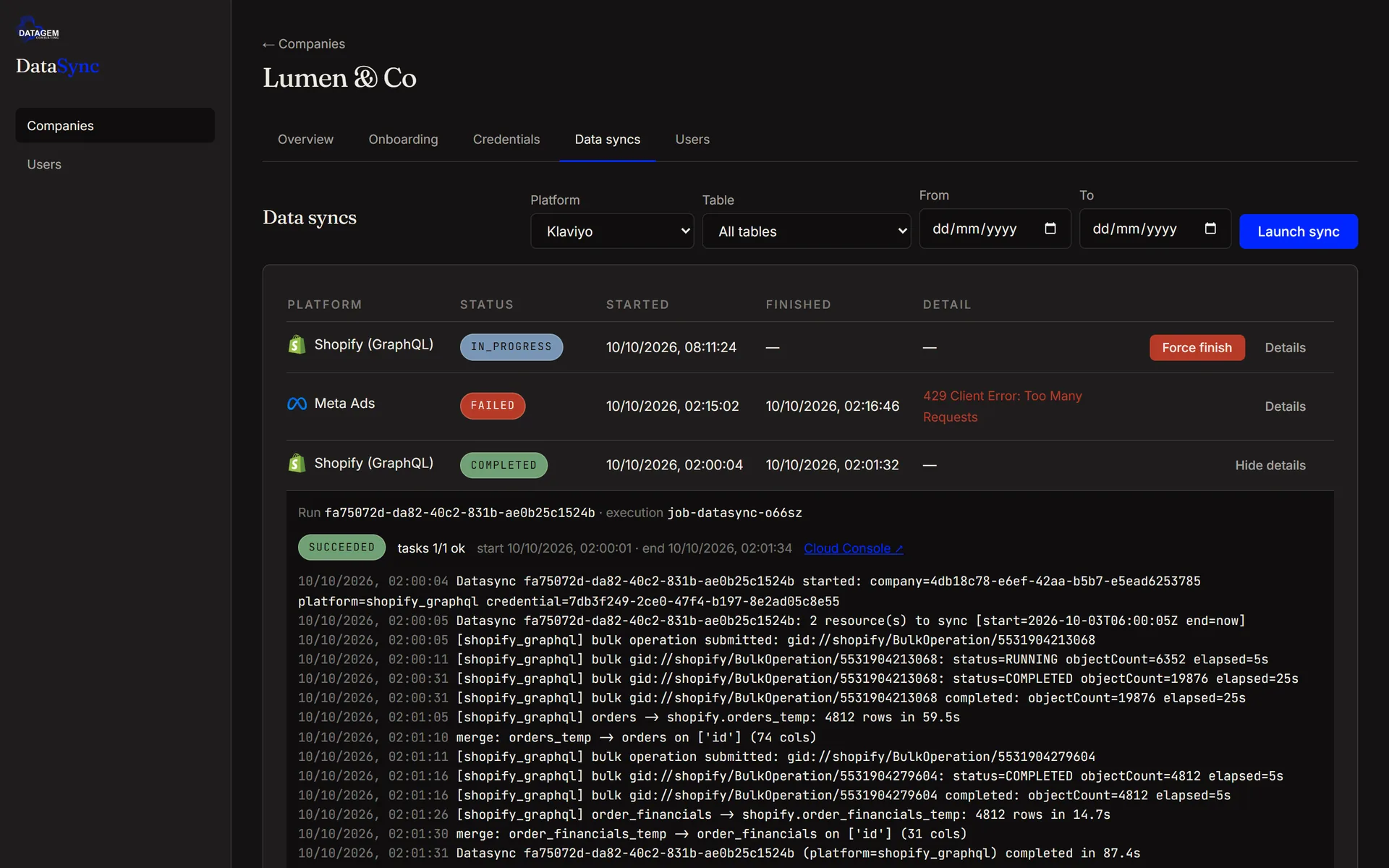
DataSync (demo tenant): a Shopify sync run with its live execution log. Demo data
Pierre and his team were a delight to work with. Before working with them, we were relying on a bunch of disparate analytics dashboard from different vendors and sources to compile our business KPIs and metrics. Pierre was able to create a simple interface, centralizing and aggregating all our data sources (DTC, wholesale, advertising, etc) in a way that makes sense for our specific business and needs. The project was seamless and efficient. Great people, great work!
FAQ
Questions, answered.
How do you get Shopify data into BigQuery?
Through DataSync, our ingestion platform. Shopify's GraphQL bulk exports are streamed into BigQuery staging tables in date windows, then merged into history tables by key, so a re-run never duplicates rows. The sync runs on a schedule, in your own Google Cloud project.
Which sources can you collect from?
DataSync connects 19 source platforms today: Shopify; Amazon, Walmart, Target Plus, Mirakl, and TikTok Shop; Meta, TikTok, Pinterest, Microsoft, and Amazon Ads; Klaviyo, Yotpo, Stay AI, and Seal; Flexport (freight and logistics) and MasonHub; and GiddyUp's signed order webhooks. For another API, we build the connector.
Can you extract data from PDFs and other documents?
Yes. At Bulq.ai, supplier quotes go through LLM extraction and human review, in up to three steps, before they reach search; the re-architected pipeline, built ahead of its rollout, adds LLM cost ceilings per document and per day. For Bonjout Beauty, an LLM parses retailers' purchase orders arriving as PDFs and emails into the MRP.
Do we have to use Looker Studio?
No. Looker Studio is what we built Bravo Sierra's and Bonjout Beauty's dashboards on, but the tables are yours: query them with SQL, or connect Google Sheets or the BI tool you already use.
Where does our data live?
In BigQuery, in your own Google Cloud project. Your syncs run there as Cloud Run jobs, so the compute is isolated from other clients and billed to you, and the data stays in an account you control.
What decisions can it drive?
The ones you compile by hand today: KPIs across DTC, wholesale, and advertising for Bravo Sierra; what to reorder and when, and what each unit really cost, for Bonjout Beauty.